Archive for the ‘Reviews’ Category

How to choose a Knew Concepts saw for jewelry making

Sunday, February 5th, 2012

Hi bloglandia! Do your jewelry projects ever seem to stack up, one on top of another? Mine do. Maybe you are able to focus entirely on each project, finish and clean up before moving onto the next, but it seems I always have 10 different things going at once. Right now I’ve got a bunch of metal shapes to saw out and then solder together. The next few blog posts are going to use a few of these projects to highlight different tools and techniques, starting with the Knew Concepts saw frames and ending with Blazer micro torches.

sawing-tools

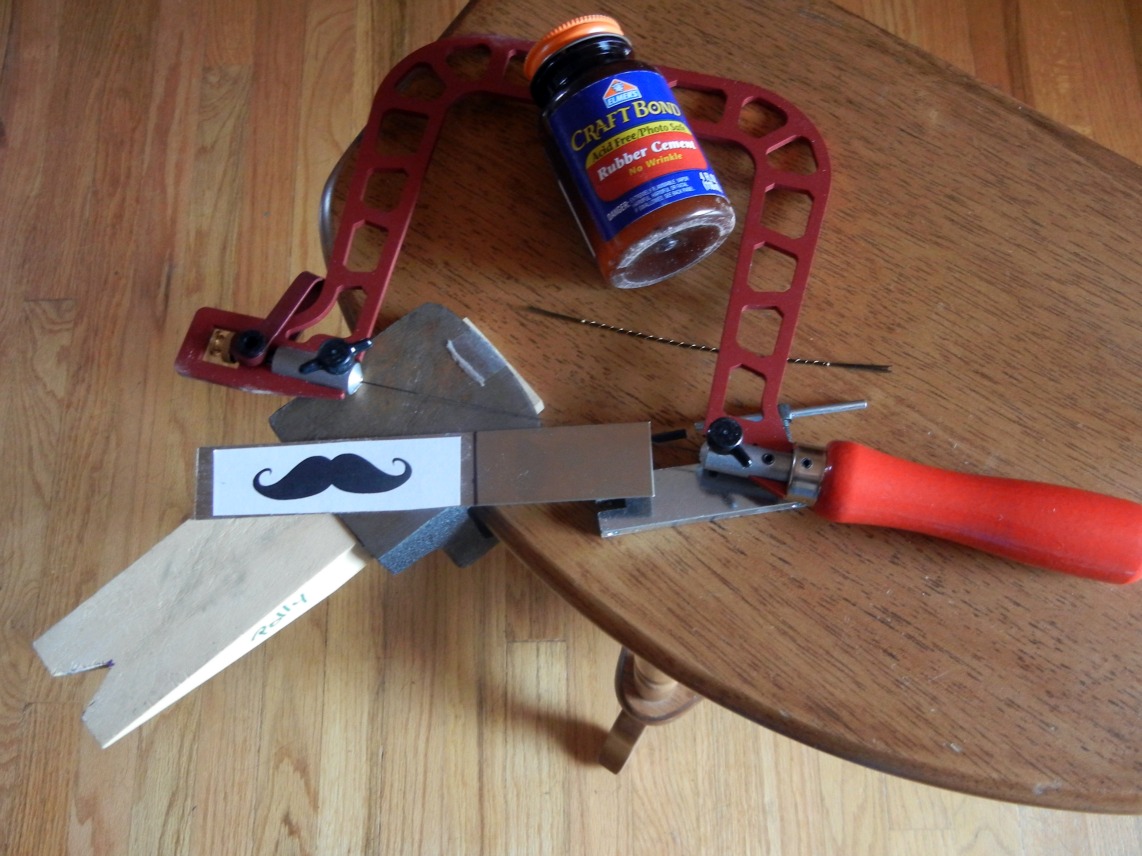
Saw frame, saw blades, bench pin, rubber cement, sheet metal and a design! Ready to saw!

So, what is new about Knew saw frames, other than their distinctive shape and bright red color? Well, most of us learned to saw with standard adjustable saw frames. In order to get the right tension on your blade with these frames, you press the frame between your body and a table or other sturdy object. By inserting the blade while the frame is bowed, the blade gets pulled tight into place when you release that bow. But – ow! That action bruised my breastbone. And when you break saw blades as often as I did starting out, it becomes a real chore.

Knew Concepts saw frames are different in a number of ways. Obviously, they are bright fire engine red. They are extremely lightweight, which makes them more comfortable to hold. And they are available in a whole lotta different models! How to pick?

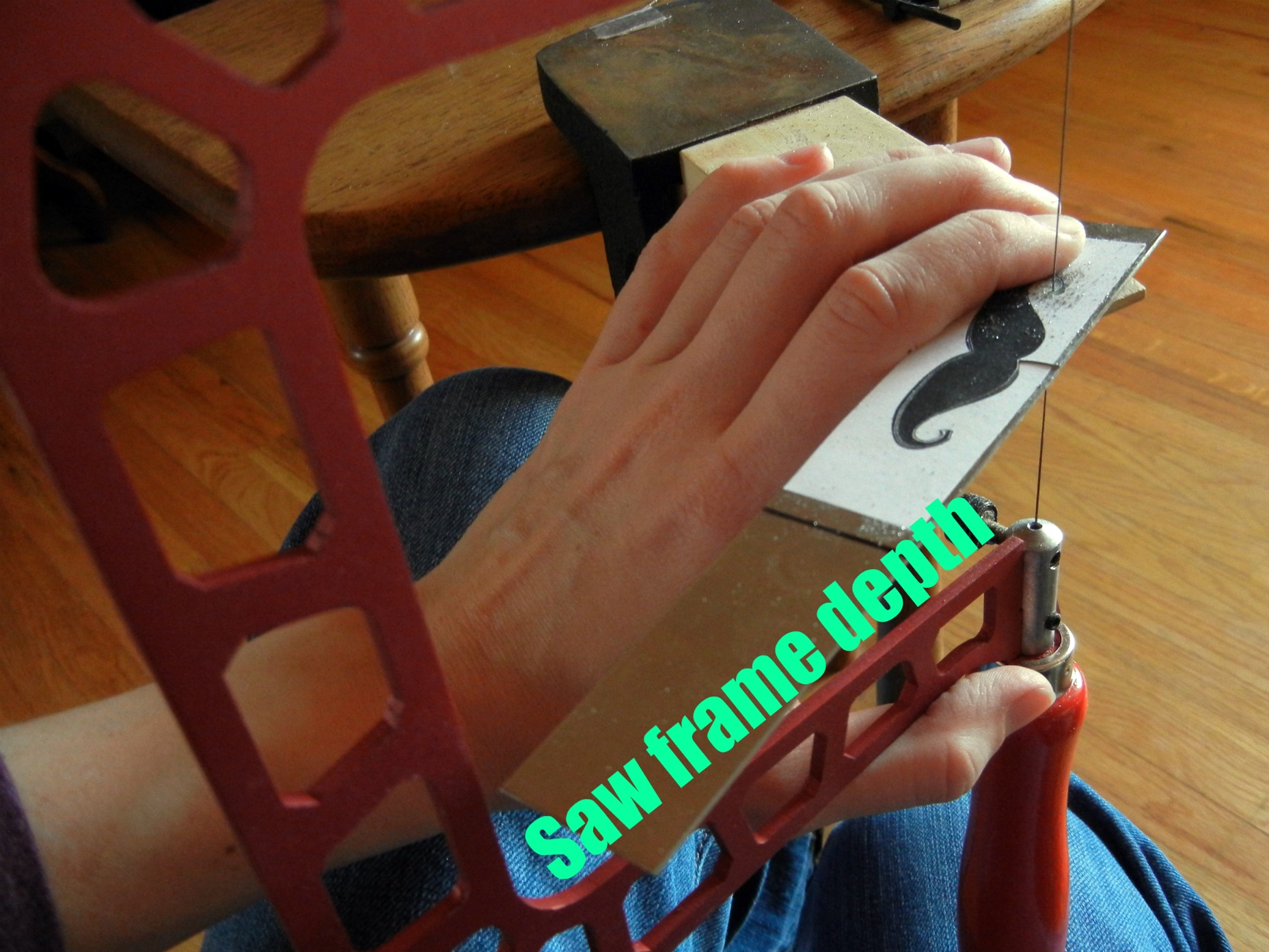
1. Size. 3″, 5″ or 8″? My vote is for 5″, unless you plan to work with very large or very long pieces of metal, in which case the 8″ frame makes sense. If your hands tire easily and you only work with small pieces, than the 3″ frame might meet your needs. I’m a middle of the road kind of girl! Note that the size refers to the depth of the frame. The height for all Knew frames is fixed. This means you won’t be able to re-use broken blades by shortening your frame. (But wouldn’t you rather not break the blade to begin with? Knew frames help with that!)

saw-frame-depth

If you want to pierce the very end of a long strip of metal, you need either a large frame or the swivel model.

2. Blade tension options. Screw tension or cam-lever tension? I 100% endorse the cam-lever tension because the tension does not change when you switch blades. Instead of sandwiching the frame between your chest and the table every time you break a blade or move to a different area of a pierced design, you simply flip the cam-lever switch! What a relief!

cam-lever-tension

The cam-lever option is totally worth a few extra bucks.

3. To swivel – or not to swivel? That is the final question. Personally, I found the swivel to be an extra complication that I didn’t really want to mess with. However, if having a really lightweight saw that can still get into tight corners is important, buying the small 3″ saw frame with the cam-lever and swivel would accomplish that goal.

After testing the different options, I decided the 5″ Cam-Lever Tension model was my favorite (69-169-52 – it is the one with the staff choice icon in our online store). It is comfortable to hold and large enough to handle pretty much any jewelry project I would undertake.

Of course, the first question should have been: do I really need a Knew Concepts saw frame when I can buy a standard jeweler’s saw for less money? The answer depends on how you define need! If budget is the #1 concern, then maybe the answer is no. An adjustable saw frame has been the industry standard for years. However, if you want to invest in a tool that will serve you well for years, and which will make the  - let’s face it – somewhat tedious job of sawing more enjoyable, then yes, you kneed a Knew frame! ~ Cindy

Riveting tool comparison – long reach vs. standard

Wednesday, September 21st, 2011
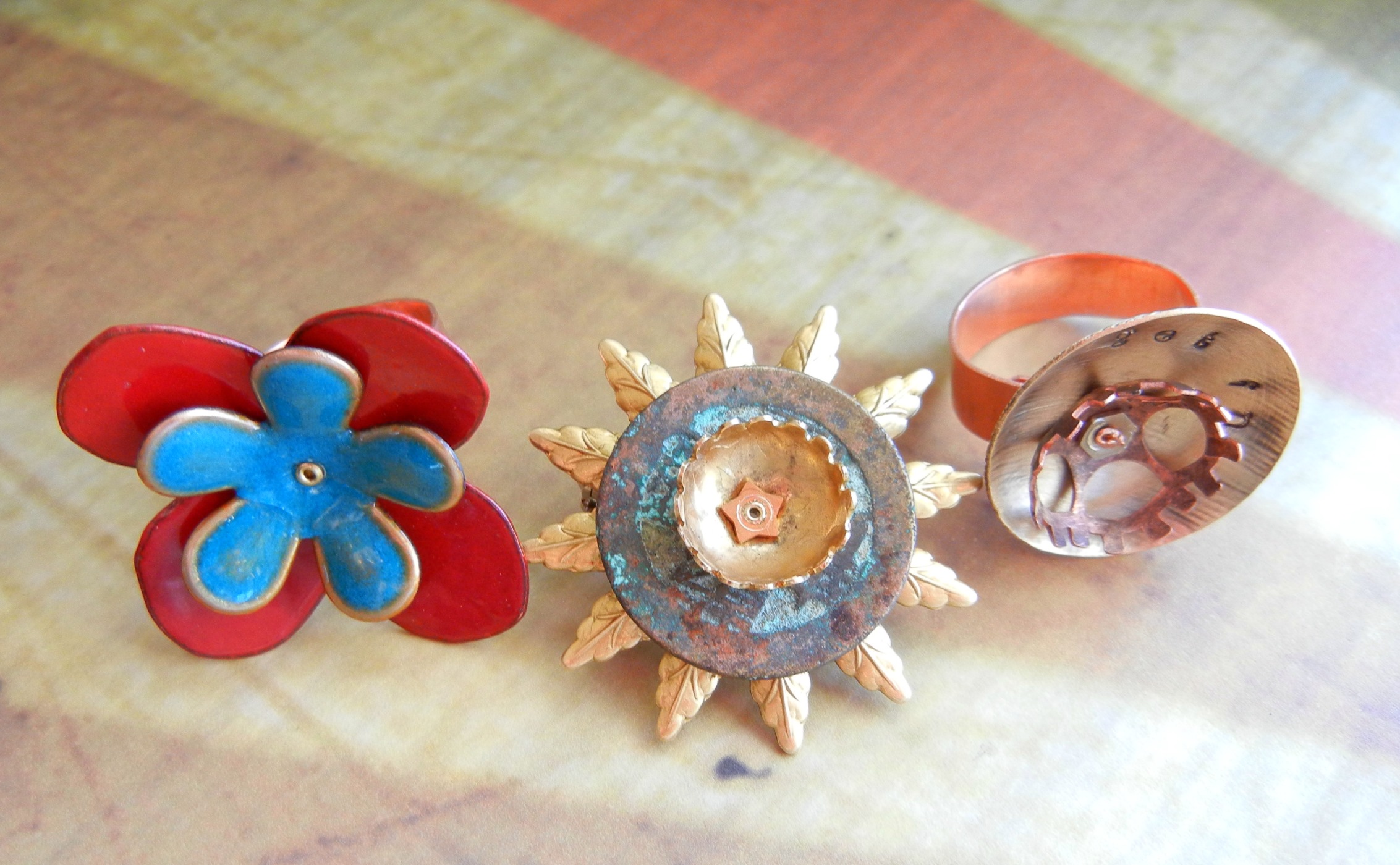
riveted-jewelry

One of these things is not like the others...

Hello, bloglandia! Today, I failed repeatedly at the project I undertook with the Crafted Findings semi-tubular riveting tool. But, as many wise people have stated, wisdom rarely comes from success. It is our failures that we learn the most from. And besides, these particular failures were actually wins in a way.

Top: standard riveting tool. Bottom: Long-reach version.

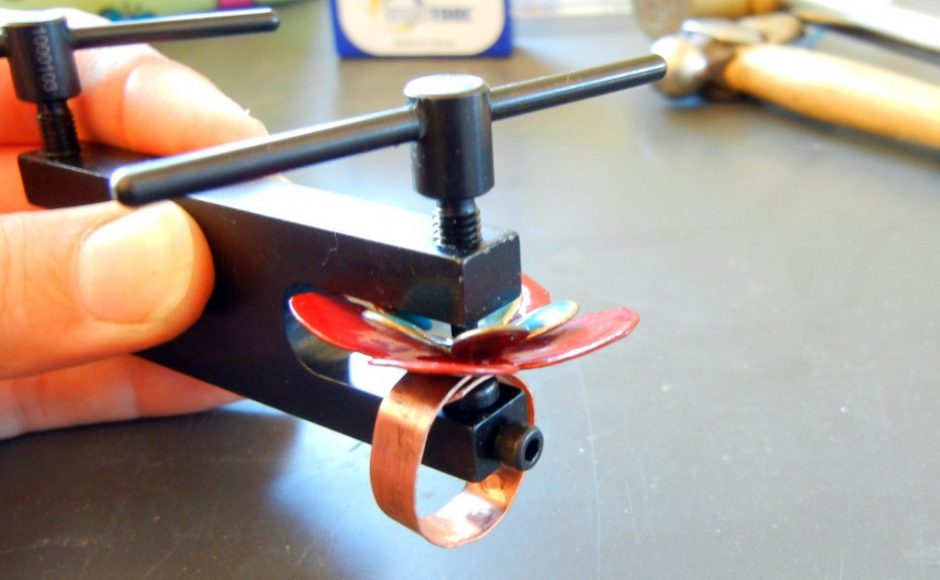
The riveting tool by Crafted Findings is now available in both regular and long-reach models.*   “Long reach” is a misnomer, in my opinion – the tool doesn’t reach any further from the edge of a piece (darn!). Instead, the tool opening is 0.2″ (5mm) “deeper” (taller) which allows thicker pieces to be stacked and riveted together.

The Crafted Findings riveting setup is really quite nifty.  When you make rivets the traditional way, there is a lot work involved in making the holes the right size for the rivets, and the rivets the right size and height for the holes. This tool eliminates that challenge. Simply pierce the metal with one side of the tool, then set the rivet with the other side. All the parts are designed to fit perfectly together. Here is a sneak peek at the instruction book included with the tool.

I’ve used the standard tool on several thin brass fairy door pieces, but nothing very thick. So, my goal today was to make something that could only be riveted with the new long reach riveting tool.

Riveted enameled copper ring. I stamped "eternal" on the band - hoping for eternal summer I guess!

First, I made a ring using C-Koop enameled flowers and a 1/4″ strip of copper sheet metal. It seemed like it was fairly thick (about 1/3″ or 9mm at the outside high points), but it actually fit just fine in the standard riveting tool. (I did have to use an eyelet instead of a rivet, though – the longest eyelet available is 7/32″, while the rivets only go up to 5/32″.)

Be gentle when you rivet breakable items - enamel is a coating of glass, so it can crack if you are overly enthusiastic with the rivet tool.

Second, I made a ring using a domed brass disk, a domed copper gear and a strip of copper. Seemed thick! But again, I was able to rivet it together with the standard tool (and a 5/32″ rivet). (My rivet is kinda squashed looking – unfortunately, the only way to rivet rings is with the unfinished side up. Normally I put the tube side of the rivet on the back of a piece in case it doesn’t look so nice. It is less likely to look squashed if you have the correct length rivet, too.  And I learned…**)

Get in Gear - domed copper and brass.

By now I was both pleased and annoyed: pleased that the standard riveting tool is actually quite versatile, yet annoyed that I had failed at my mission. I didn’t want to make my own eyelets from tubing, so my project needed to fit the 7/32″ eyelet, yet be taller than the standard riveting tool.

The coin already had this lovely patina right out of the bag, so I left the raw brass elements plain for contrast.

Third time’s a charm! I stacked a pin back, brass petal wheel, Chinese coin, domed brass gear and a couple rivet accents together for this pin. Too tall for the standard riveting tool, yet short enough at the center to fit a 7/32″ eyelet. Finally!

The back of the pin - just one eyelet secures it all together. No glue!

Once I found the magic combination of parts, I began thinking of all types of designs where the “long reach”  riveting tool would be handy. 3/32″ long-reach attachments are coming soon, so if you haven’t purchased a Crafted Findings riveting system yet, I’d recommend getting the long reach version.***  For a couple extra bucks, it will ensure you have the most design options. But, as my failures demonstrate, there is still a lot you can do with the standard riveting tool!

This picture shows the height difference between the long reach and regular riveting tools.

Have you made something with the Crafted Findings riveting tool? We’d love to see pictures! ~Cindy

_________________

*The tool is also available in both 1/16″ and 3/32″ diameter options. I used 1/16″ for all of my examples today, but if you plan to use your eyelet holes as connection points (like for jump rings), get the 3/32″ size components (sold separately). Only very fine gauge wire will fit through the 1/16″ eyelets, and no jump rings that I could find!

** One last riveting tip: if (like me) you choose to not put the Crafted Findings tool into a vise (as the manufacturer recommends), hold it flat on the edge of your tabletop. It will help ensure that everything stays lined up correctly when you flare that rivet!

***Or, if you have the standard 1/16″ setup, you could purchase the long-reach body with 3/32″ attachments. The convenience of not swapping out parts will easily pay for the extra tool purchase.


Wubbers Wire-Looping Pliers – and more

Friday, June 17th, 2011

Hello bloglandia! There was a “hit” product at last week’s Bead & Button show in Milwaukee: the new wire-looping pliers from Wubbers.  Our booth sold out – then our website sold out! Wow. It was “wub – twue wub.”  We just got more in stock, but they could be gone soon!

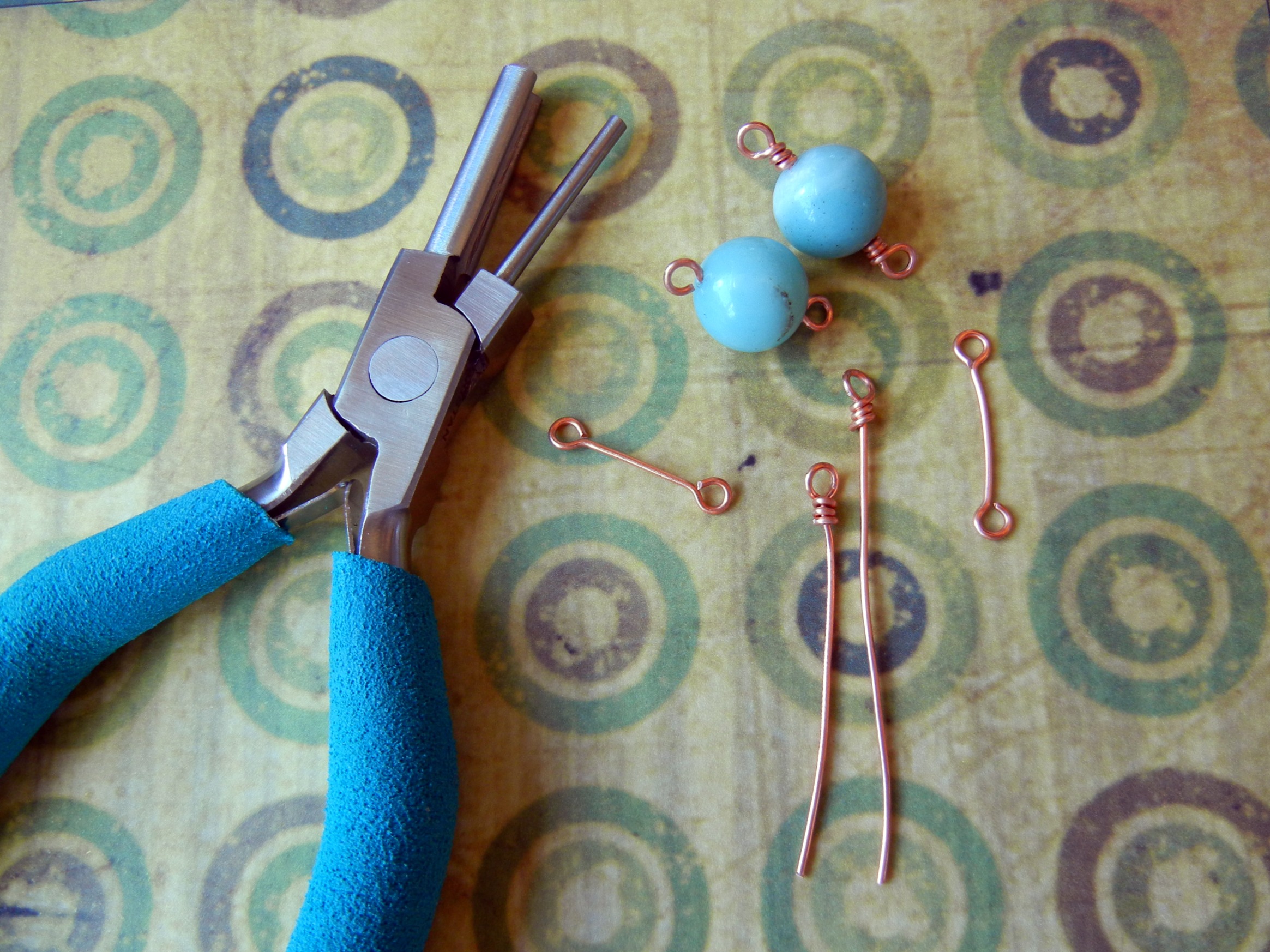
What makes Wubbers wire-looping pliers so special? Well, instead of having two tapered jaws (like  round-nose pliers), the Wubbers wire loopers have one straight round jaw, and one concave jaw that rounds the wire over the first. Simply insert the wire and squeeze to get perfectly rounded loops that are always the same size.  Consistency has never been so easy to achieve!

Wubbers has an excellent YouTube video demonstrating their use (the video is also included on CD with each pair).  Go ahead and watch. This post will still be here when you are done!

Ok. Welcome back!

When I tried the Wubbers wire-loopers for myself, I instantly liked how easy it was to make eye pins. With round nose pliers, it can be hard to grip the very tip of the wire. Not an issue with the Wubbers!

Next: wrapped loops. I had a bit of trouble with this until I realized I was using the wrong gauge wire.  Wubbers wire-loopers are designed specifically for 20-gauge round wire. I was using 18-gauge copper and just did not have enough room between the pliers and the bead to make my wraps. Once I switched to 20 gauge I was fine, although it took me a few tries to replicate the Wubbers technique because I am so accustomed to using round-nose pliers.

Wubbers wire-looping pliers are the perfect choice for the jewelry maker who:

  1. Works primarily with 20-gauge wire. (20 gauge fits most gemstone, crystal, glass and metal beads, plus large-hole pearls.)
  2. Wants to create loops that are exactly the same size, easily, over and over again.
  3. Values economy of motion and good ergonomics.


Check out those JAWS: Eurotool concave bending pliers, Wubbers wire-looping pliers, and Lindstrom round-nose pliers.

Rings & Things sells two similar (but definitely not comparable) wire-looping pliers – #69-026 and #69-027, by Beadalon and Eurotool, respectively. Each of these has one tapered jaw (not straight like the Wubbers) with a concave jaw. These pliers will bend and hold the loop while you make the wire wraps, but they should NOT be used with the technique shown in the Wubbers video. If you repeatedly squeeze the wire in an attempt to round it, you will end up with lots of ugly bite marks in your wire.  (Wubbers are “meticulously hand finished to minimize marring and to ensure that Wubbers’ quality is incomparable” – this little experiment proved it to me!)

The damage I created by using Wubbers techniques with non-Wubbers pliers. Eek! Not recommended at all.

To avoid this, only squeeze once – and gently. Manipulate the wire ends with your fingers or chain-nose pliers to complete your loop instead of re-positioning the wrapping/bending pliers. The benefit of these pliers (besides their low price tag!) is that you can vary your loop sizes. However, given the popularity of the Wubbers loopers, it seems many people view this “feature” as a liability!

With practice and patience you can create consistent loops with round-nose pliers. (Many people mark the jaws of their round-nose pliers with a marker so that they always bend their wire around the same spot.)  Since I switch wires gauges and loop sizes so often I’ll probably stick with this tried-and-true method. But if wire wrapping is a headache, Wubbers wire-wrapping pliers might be just the solution you’ve been looking for! Wubbers truly are made to make jewelry.  ~ Cindy


Luster Gel – a new way to color silver!

Tuesday, May 10th, 2011


Create a full rainbow of colored patinas on silver with new Luster Gel.

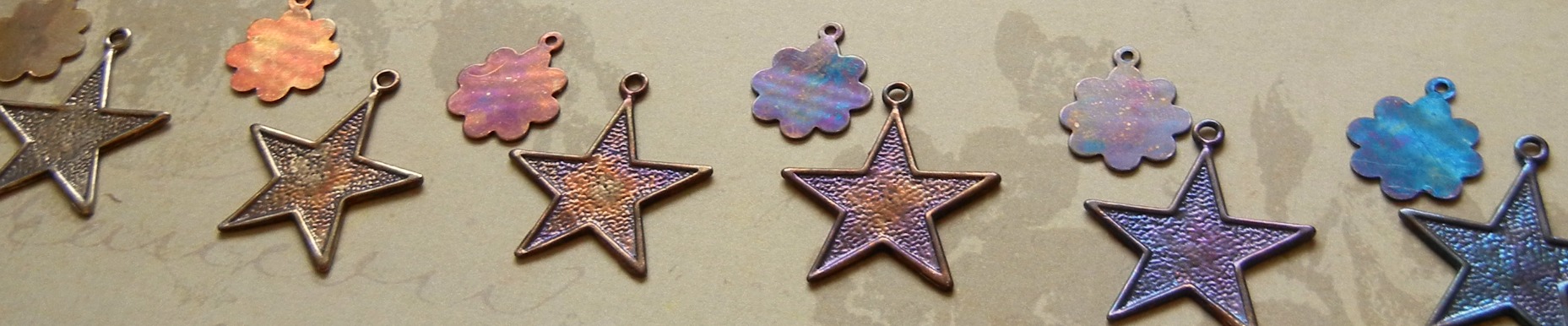
Iridescent Luster Gel for Silver is a brand-new product that makes it easy to change the color of silver jewelry. Unlike patina solutions that mostly* darken or oxidize the metal, Luster Gel creates a whole rainbow of different colors. The best part is, the colors appear in a reliable order! (*I say mostly because it is possible to get cool rainbows when using liver of sulfur…however, the process is less predictable and may require additional chemicals or heat.)

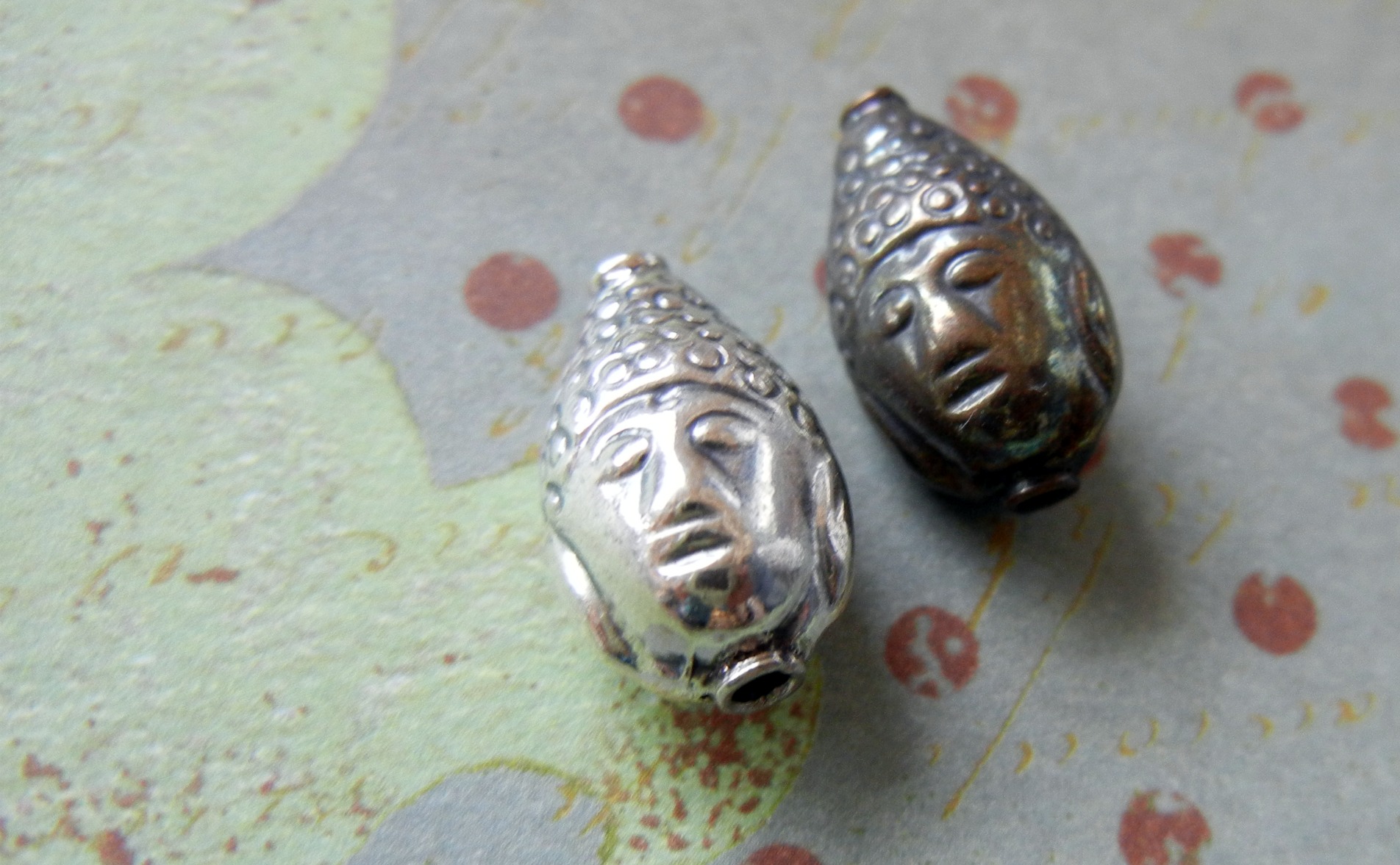
buddha beads

Sterling silver Buddha / bodhisattva beads before and after being treated with Luster Gel. The blue color takes 20-30 minutes to achieve.

Sterling silver, fine silver and silver-plated jewelry pieces can all be colorized with Luster Gel.  Since patinas are created via chemical reactions, anti-tarnish treatments and coatings could interfere with the gel’s performance. Also, follow the basic chemical safety rules when working with this product: avoid skin contact, wear eye protection and work in a well-ventilated area. Don’t eat it either!

luster gel for silver

Iridescent Luster Gel for Silver

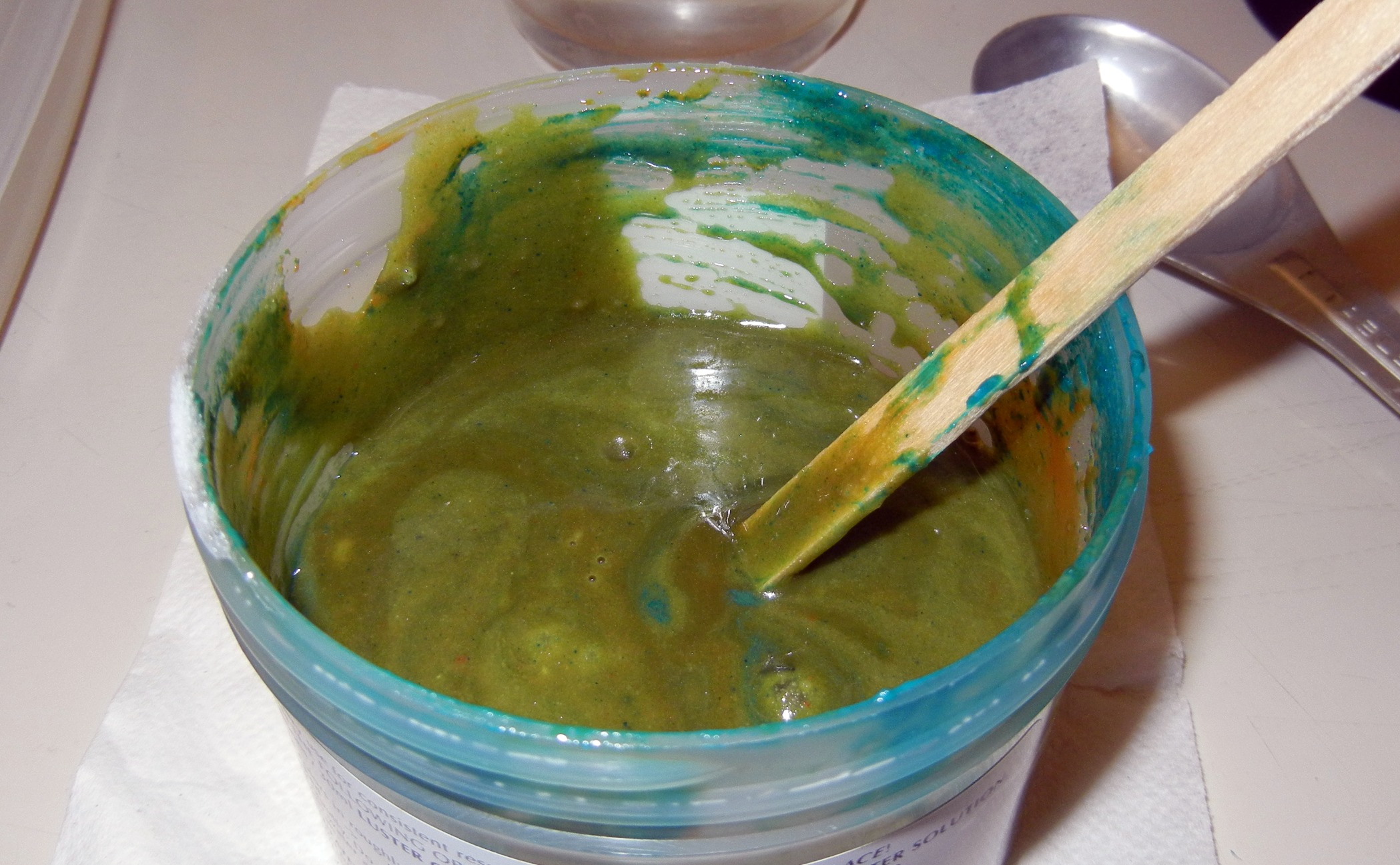
Luster Gel is sold in a 4 oz. jar and needs to be mixed with water and the included activator powder prior to use.

luster gel

Luster Gel gets its green color from cupric (copper) acetate.

For each batch of Luster Solution, mix, in order:

  1. 100 ml (about 3.5 oz.) filtered water (use warm – not hot – water for a more rapid color change)
  2. 30 ml (1 oz. / 2 tablespoons) Luster Gel (stir before use)
  3. 1/2  teaspoon Luster Activator
luster gel solution

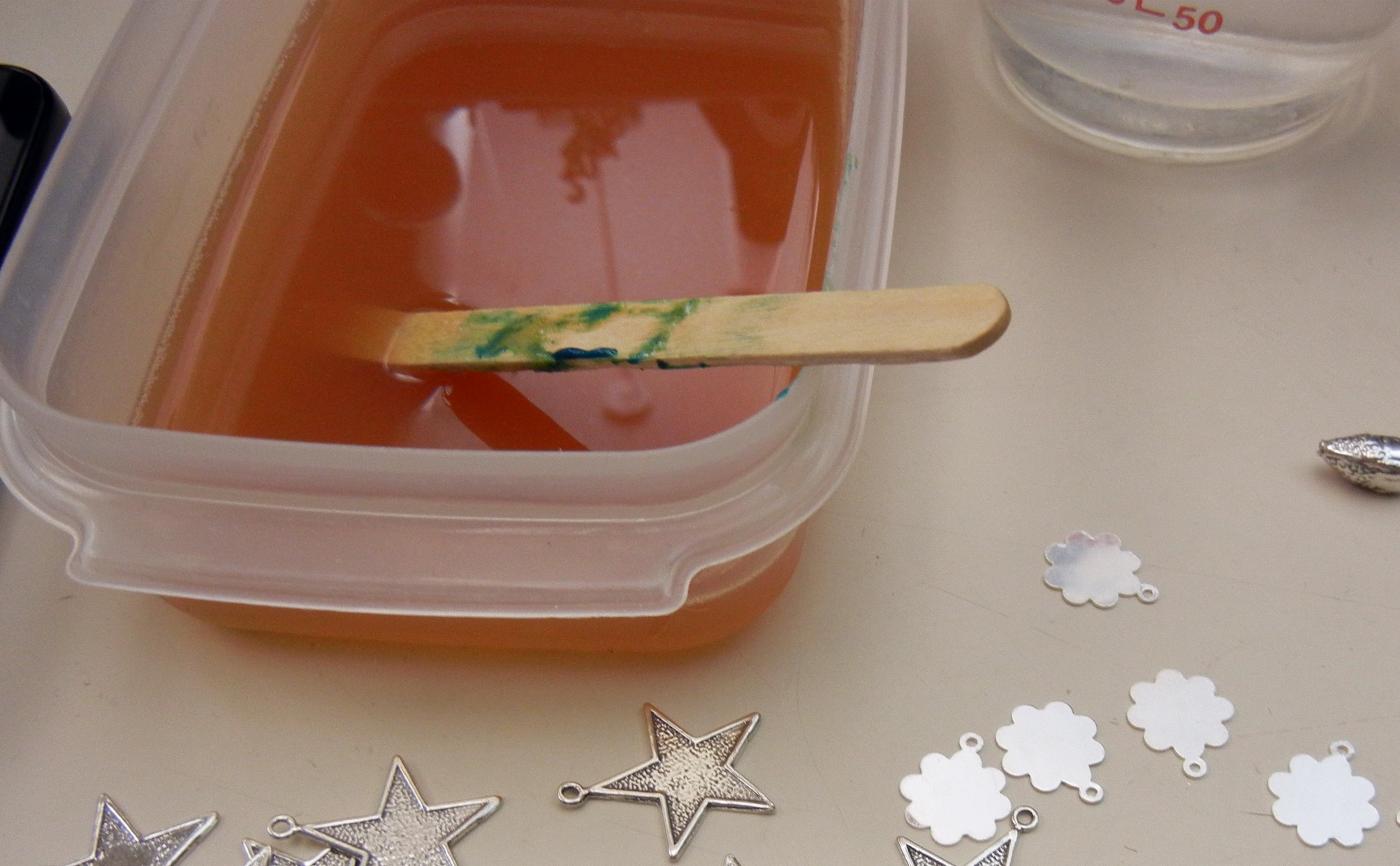
Once mixed with the activator, the Luster Solution turns dark orange.

Dip your piece into the solution (use a string or a plastic hook, or wear gloves, to avoid touching the solution). Over the next 30 minutes, the silver will change from yellow to gold, then orange – red – brown – purple – and finally blue. If you leave it in longer, it will go through the same color-change process again, only this time the colors will be deeper and more iridescent.

luster gel silver rainbow

All of the colors pictured here occur within 30 minutes, starting with gold (top left) after about 5 minutes in the solution and ending with deep blue after a full 30 minutes. On the far right are plain sterling pieces to show the transformation.

Once you are happy with the color, pull your piece out of the solution, rinse with clean water and allow it to air dry. Once it is completely dry, seal it with Renaissance Wax or a clear spray sealer to protect the finish. That’s it. Super easy!

When you are done, mix baking soda into the Luster Solution to neutralize it. At that point you may safely dispose of it by washing it down the drain.  Happy rainbows to you! ~ Cindy


[stextbox id="download"]

Extra midweek fun: we updated our Tuesday Tunes today.

(Hint: put on your boogie shoes!)

[/stextbox]