Archive for the ‘guest blogger’ Category

Two ways to color metal using Image Transfer Solution

Friday, April 22nd, 2011


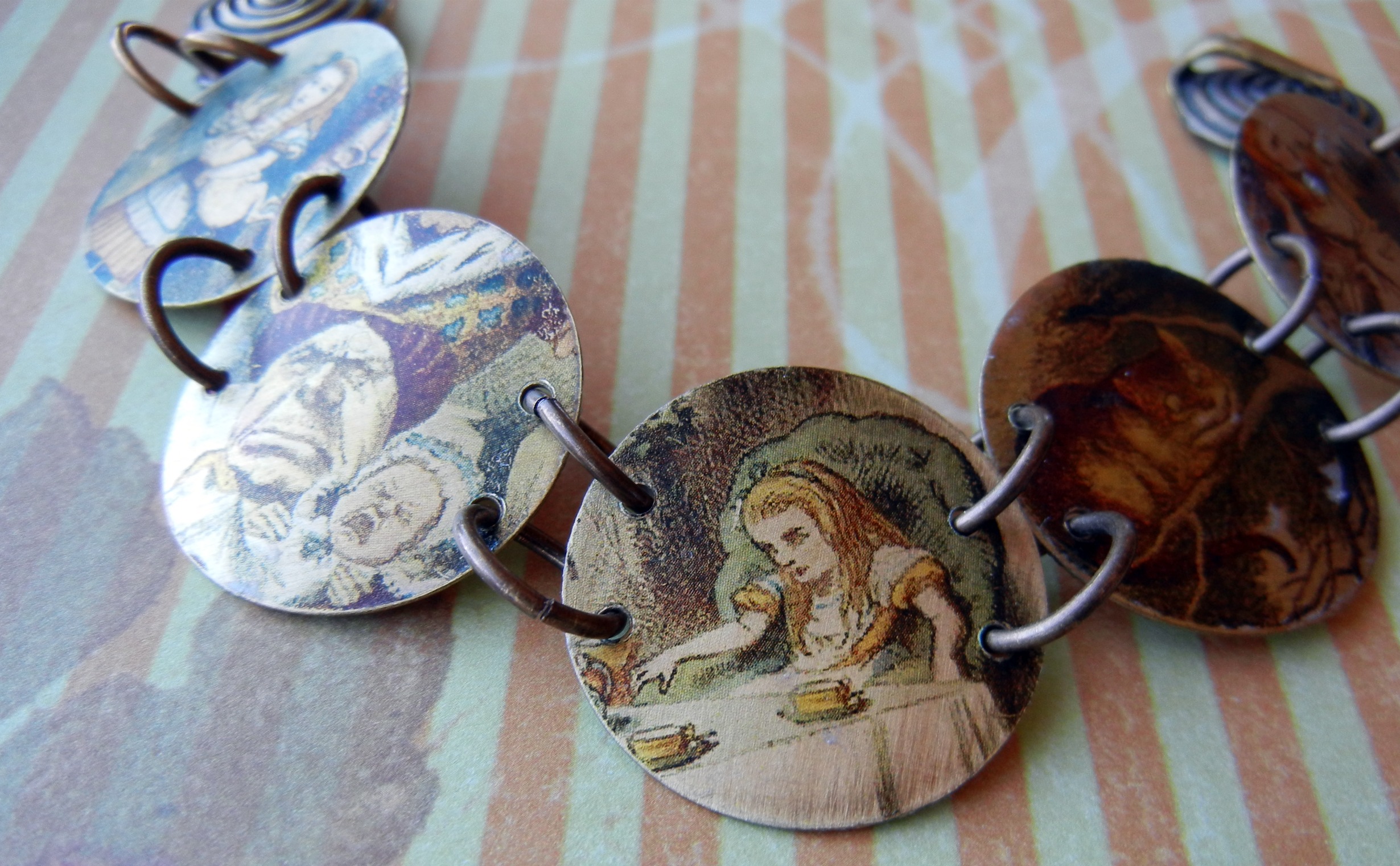
Alice in Wonderland image transfer bracelet

Hi Bloglandia! Last weekend I did a demo in our Spokane showroom on how to use Sherri Haab’s Image Transfer Solution (ITS) and thought now would be a good time to share these techniques for colorizing metal with everyone.

Image transfer is just that – transferring an image from the paper it is printed on to a different surface (in this case, metal jewelry components). Image transfers have a vintage, ethereal feel, and I love how the different colors of metals shine through. Unlike many of the other solvents and processes used for image transfer, Image Transfer Solution (ITS) is non-toxic. Yay! Plus, it has another purpose not even mentioned on the bottle: it is an excellent way to seal colors onto metal (more on that in a bit).

Transferring Images – ITS Method #1

One caveat: The images you use must be printed on a laser (toner based) printer. Ink jet pictures will not work. The pictures can be black or white or color. Photos and text should be reversed before you print, since transfers will be mirror images.

To be honest, I did not like ITS the first couple of times I tried it. I kinda hated it. Following the directions on the bottle, I prepped my metal with steel wool and heat-set the images in a 325 degree oven – just like it said! – but things just kept going wrong. Either my images would wash right off the metal or the paper would be so very stuck to the metal that no amount of scrubbing would remove it. But I loved the concept, so I kept playing with it.  Below is my own method for using ITS. Maybe the package directions will work like a charm for you. If not, I hope my tips and tricks help:

  1. Scuff up your metal (aluminum, brass, copper and silver all work great) with a medium grit sanding pad or sand paper. Steel wool leaves the surface too smooth, in my opinion.
  2. Wash metal with rubbing alcohol to remove dirt, dust and oil – even if it looks clean!
  3. Using a clean, dry paintbrush, evenly coat the prepped metal with just a couple of drops of ITS.

  1. Press image face-down onto metal and press firmly into place to remove any air bubbles. ITS is like glue – you will not be able to reposition your paper at all, so be careful to place it where you want it! Let dry. Use an iron (high heat, no steam) to heat the metal for 1 or 2 minutes. Don’t worry, the paper won’t burn. Let metal cool.
  2. Place the metal into water and using a gentle circular motion, begin rubbing the paper off, leaving the image behind. Don’t get to aggressive or you could lift off parts of the image. Patience pays off here.
  3. After most of the paper is removed, use a sheet of polishing paper and more water to remove the finer paper fibers.
  4. After all of the paper is removed, seal the image with a dab of Renaissance Wax and a soft cloth. It really improves the luster.
image transfer necklace

My photograph looks like a vintage postcard after being transferred onto aluminum. The Swarovki crystals are the same colors as the prayer flags hanging on the mountain tea house.

Complete your jewelry piece! The image is permanently attached. You can even punch holes or dap the metal and it won’t come off!

Sealing Colors – ITS Method #2

Image Transfer Solution can also be used to permanently seal inks onto metal! Ranger Adirondack Alcohol Inks are tons of fun to mix and blend onto non-porous surfaces, like metal, but since they are ink, they can be rubbed or washed off. That is, unless you seal them with ITS. When you heat-set ITS, it binds the color to the metal. It will not wash off or bleed onto your customer’s skin.

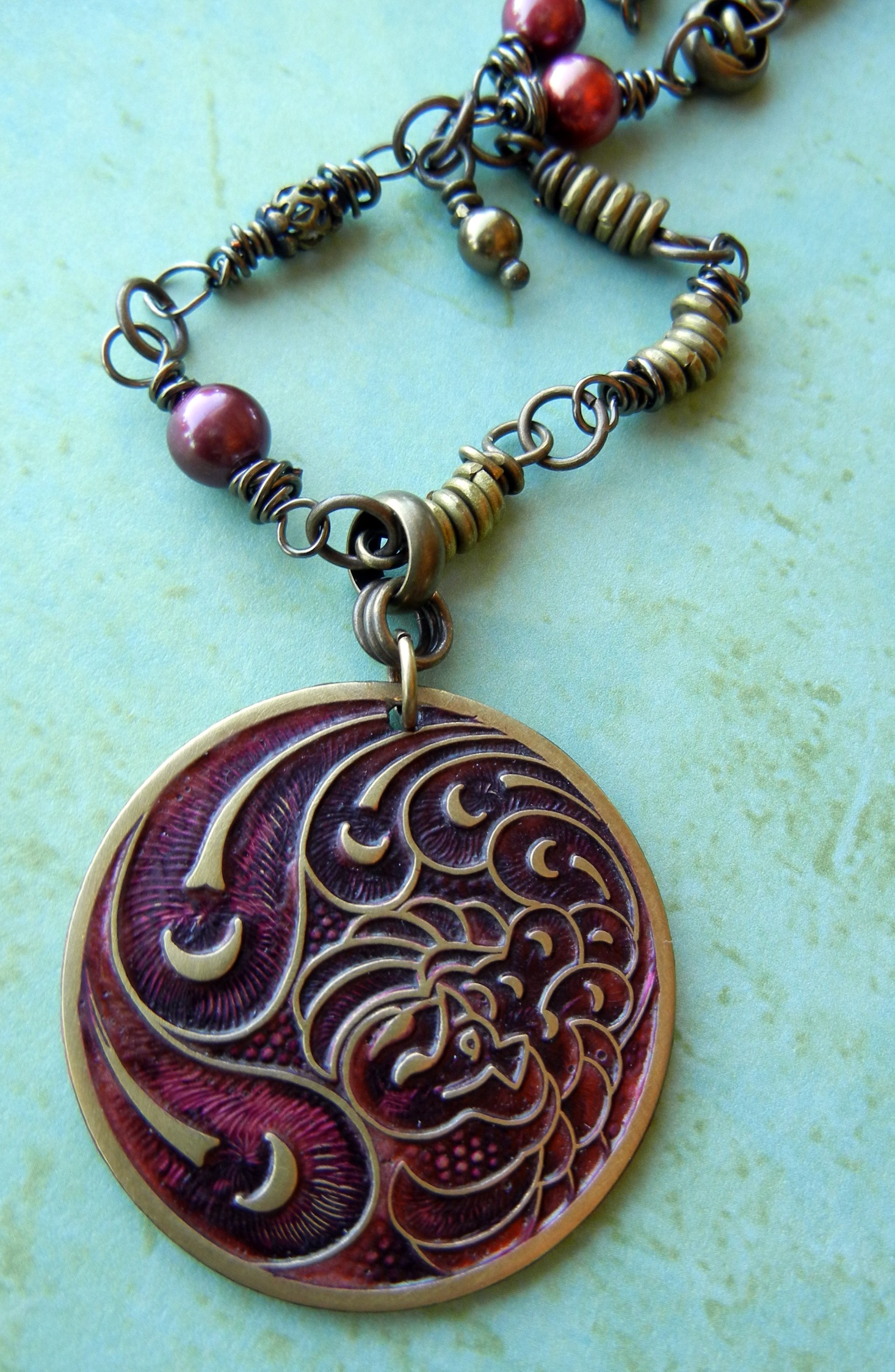
Vintaj fussy peacock pendant colorized with alcohol inks for a faux enamel look.

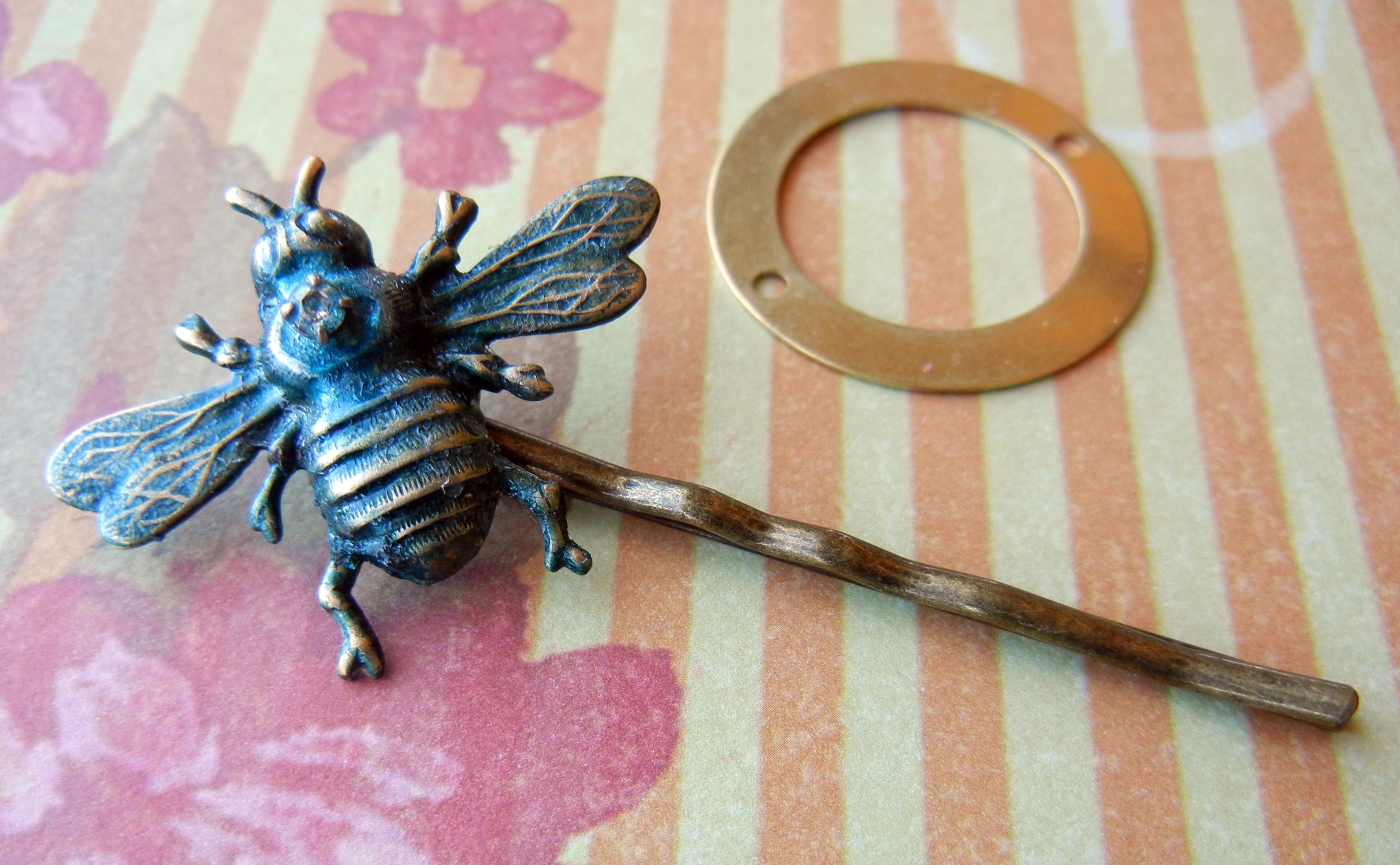
You can color your metal with alcohol inks and then, after they’ve dried, paint a thin layer of ITS over the top. Another option is to mix the ITS directly with your inks (just a few drops of each) and paint that mix onto your metal. Either way, once the ITS has dried, you need to heat-set it to make the bond permanent. Just follow the directions on the Image Transfer Solution package for using an oven to heat-set (the iron won’t work for this application).

Looks like patina - but this blue bee was colored with alcohol inks.

There you have it! Two tried and true methods for permanently coloring your metal pieces for jewelry and other applications. Although this post focused on metal, Image Transfer Solution can be used on polymer clay, etched glass and other surfaces too! Since it really only takes a couple of drops per image, you’ll have plenty to experiment with! ~ Cindy


PS: here are some handy links to some other how-to‘s in the Rings & Things blog!

How to dap and dome metal jewelry

Friday, April 8th, 2011

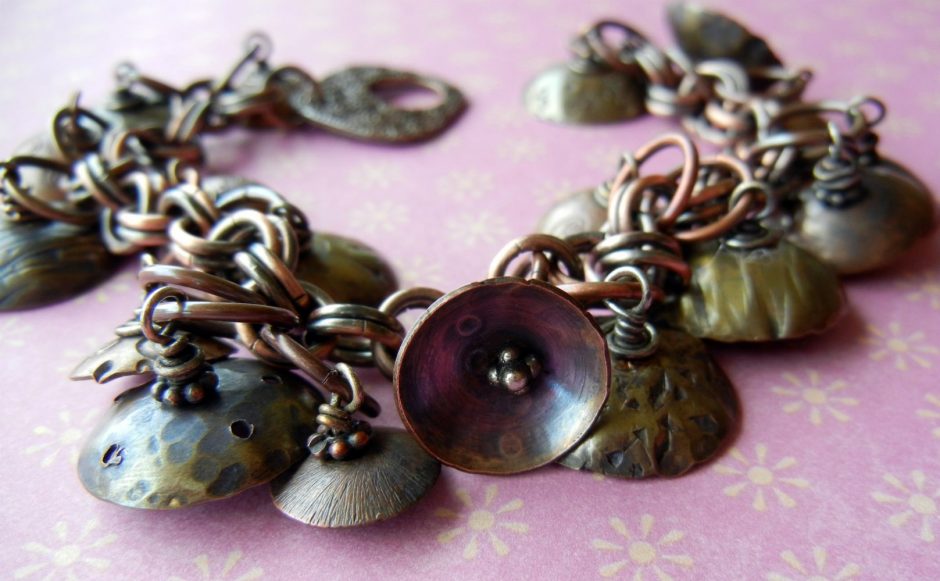
Cymbals of Happiness bracelet by Sondra: stamped, textured and domed copper and brass disks make a tinkling charm bracelet.

It took me awhile to accept “dapping” as a real word.  Even now that I am obsessed with dapping every flat piece of metal that crosses my path, I still find the term awkward. Spell check, ignoring the facts as usual, still doesn’t believe.

In jewelry making, dapping simply means taking a flat piece of metal and curving it into a dome with special dies and punches, called a dapping set. The dapping block (or die if you prefer) has a series of concave impressions that correspond in size with the dapping punches.

Rings & Things #69-199 dapping set by Eurotool, and a variety of flat and dapped metal pieces.

Simply place your metal piece in the block and use a hammer (preferably brass) to repeatedly tap the punch into the metal. I say tap because your goal is to gently bend the metal into a smooth, even curve. If you just whack as hard as you can, the metal won’t shape up evenly.

how not to dap metal

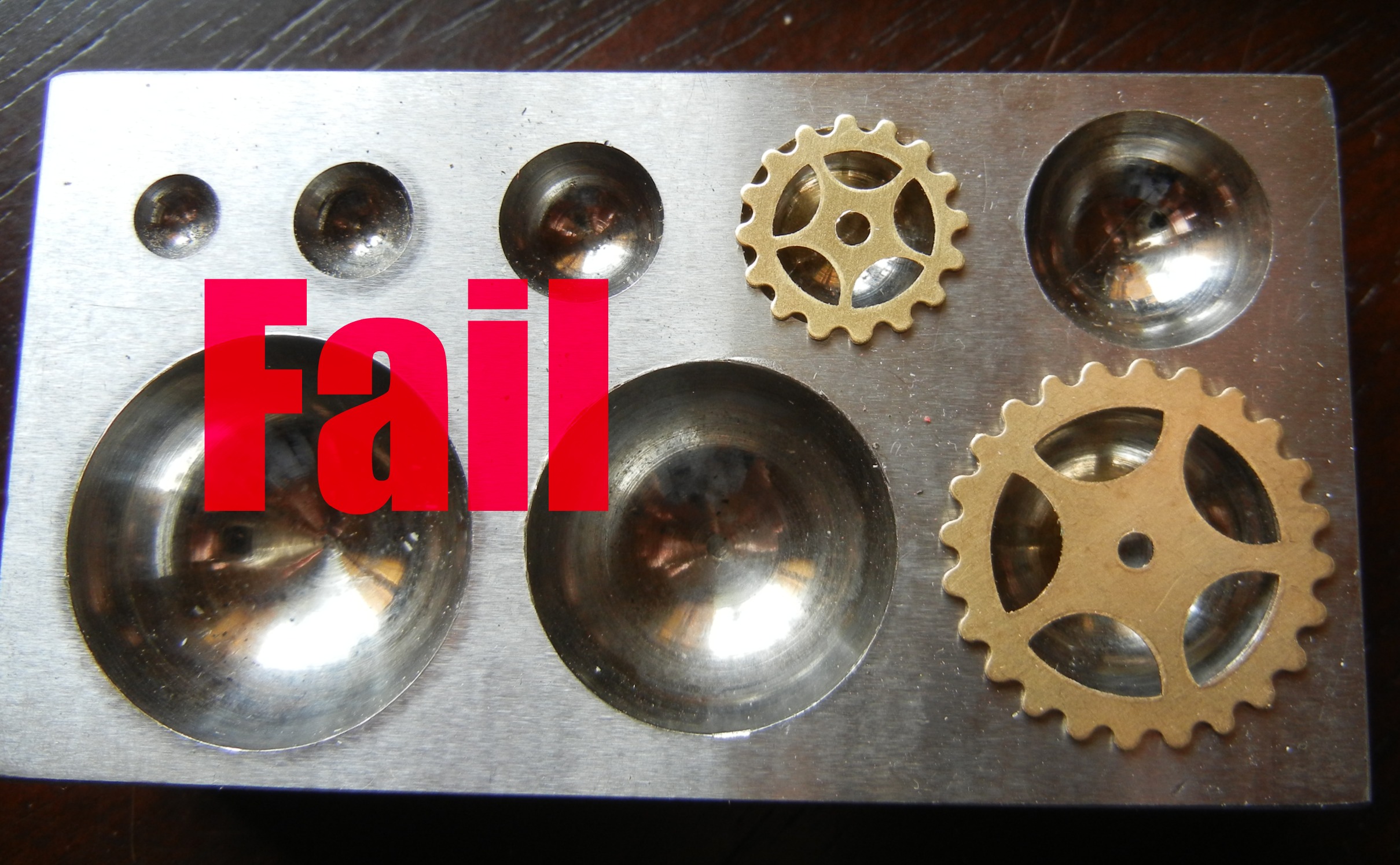
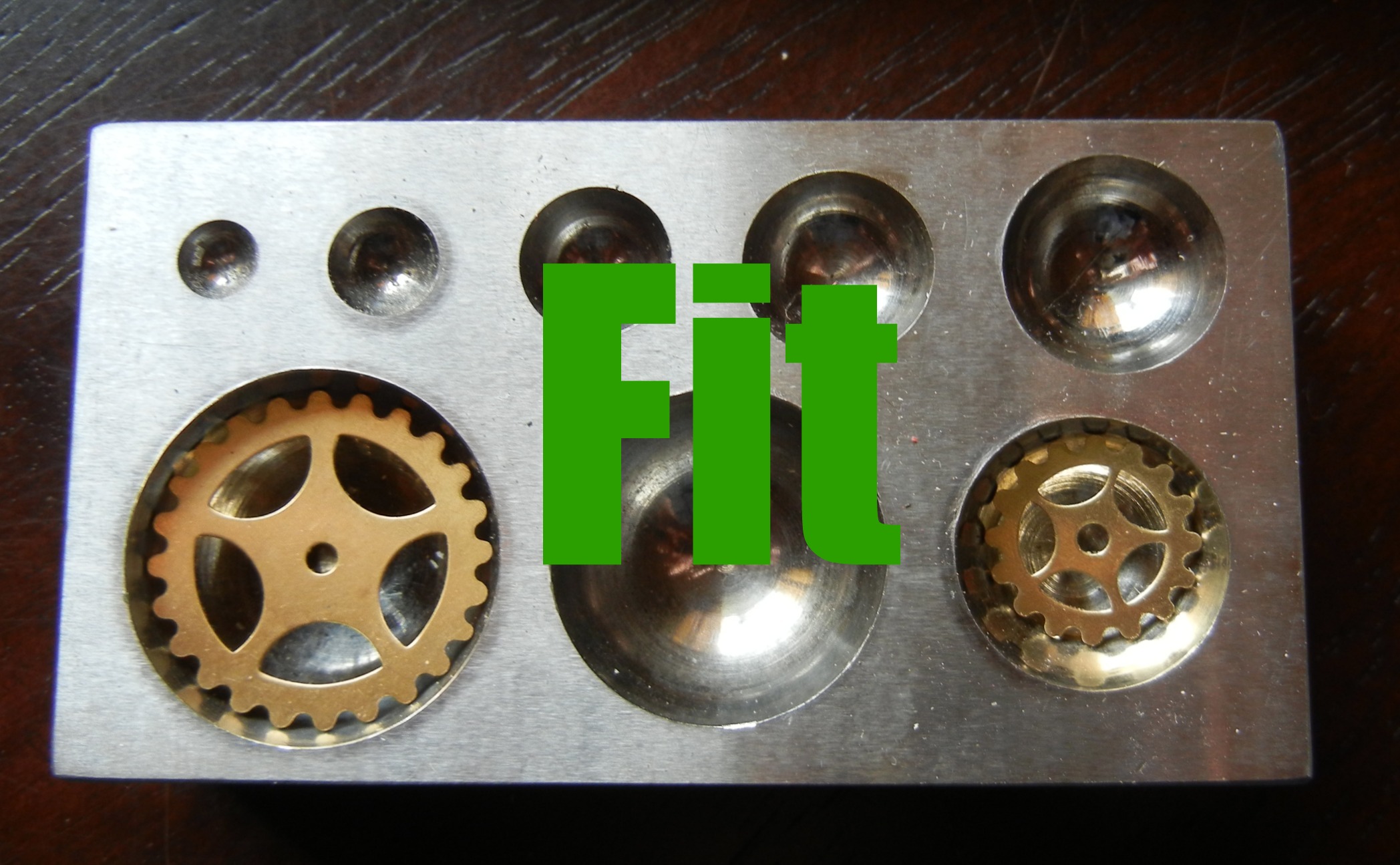
The entire piece of metal needs to fit inside the impression, not sit on top like in this picture.

how to dap metal

Here the metal pieces are inside the impressions, ready to be dapped.

Another tip: don’t hammer straight down on your metal. Hold the dapping punch at and angle, and tap tap tap with your hammer, turning your metal after every few taps to ensure that it is shaping up nicely.

For best results, keep rotating the die and the metal.

As you dap (tap, dome, whatever!), the height of the metal piece increases, while the width decreases. So after you’ve dapped as much as you can in one impression, you can move the metal into the next smallest hole and dap it with the next smallest punch to get a deeper dome.

Doming adds a professional quality to your work. Even just a slight curve instantly makes a metal disk reflect more light.

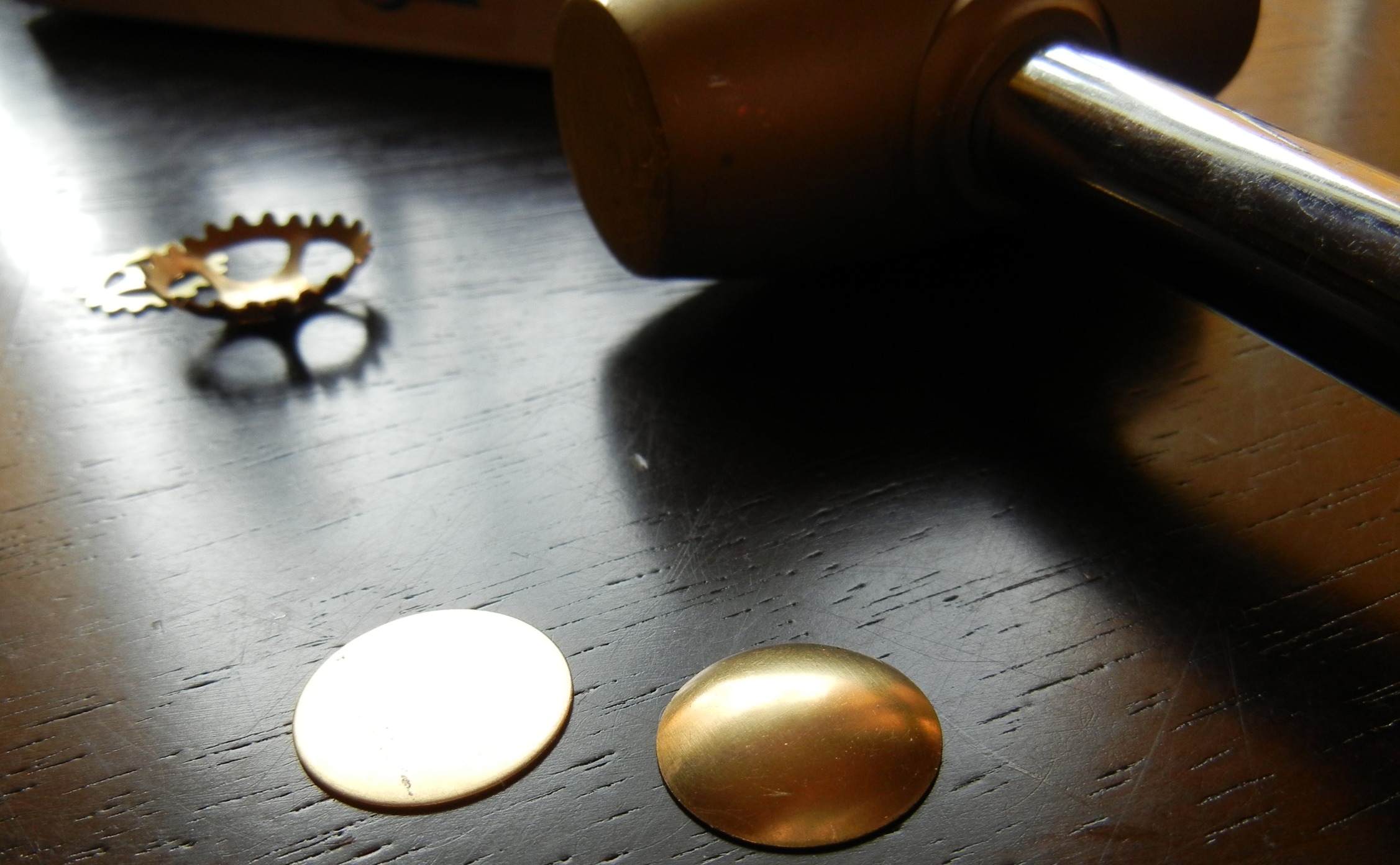
flat disk and dapped disk

Just a few taps is all it takes!

Brass, copper, aluminum and sterling silver are all excellent soft metals to dap (most of my images are of raw brass blanks). Even copper coins can all be dapped, although coins are thick and will require you to apply a bit more muscle.  If you want to stamp, texture, punch holes, or otherwise adorn your metal (and you will!) do all that before you dap for beautiful results:

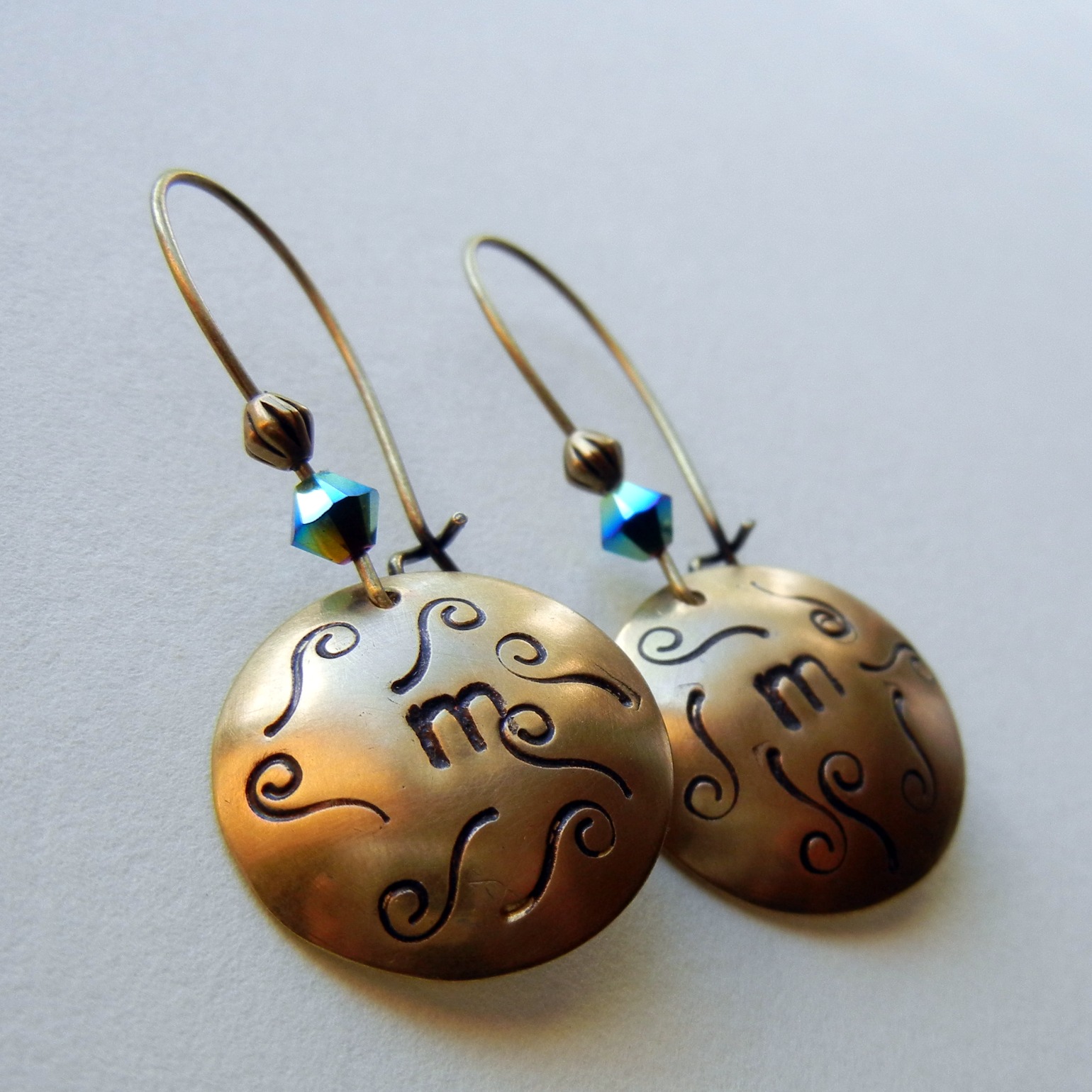
Use stamps to monogram brass disks for easy, elegant earrings.

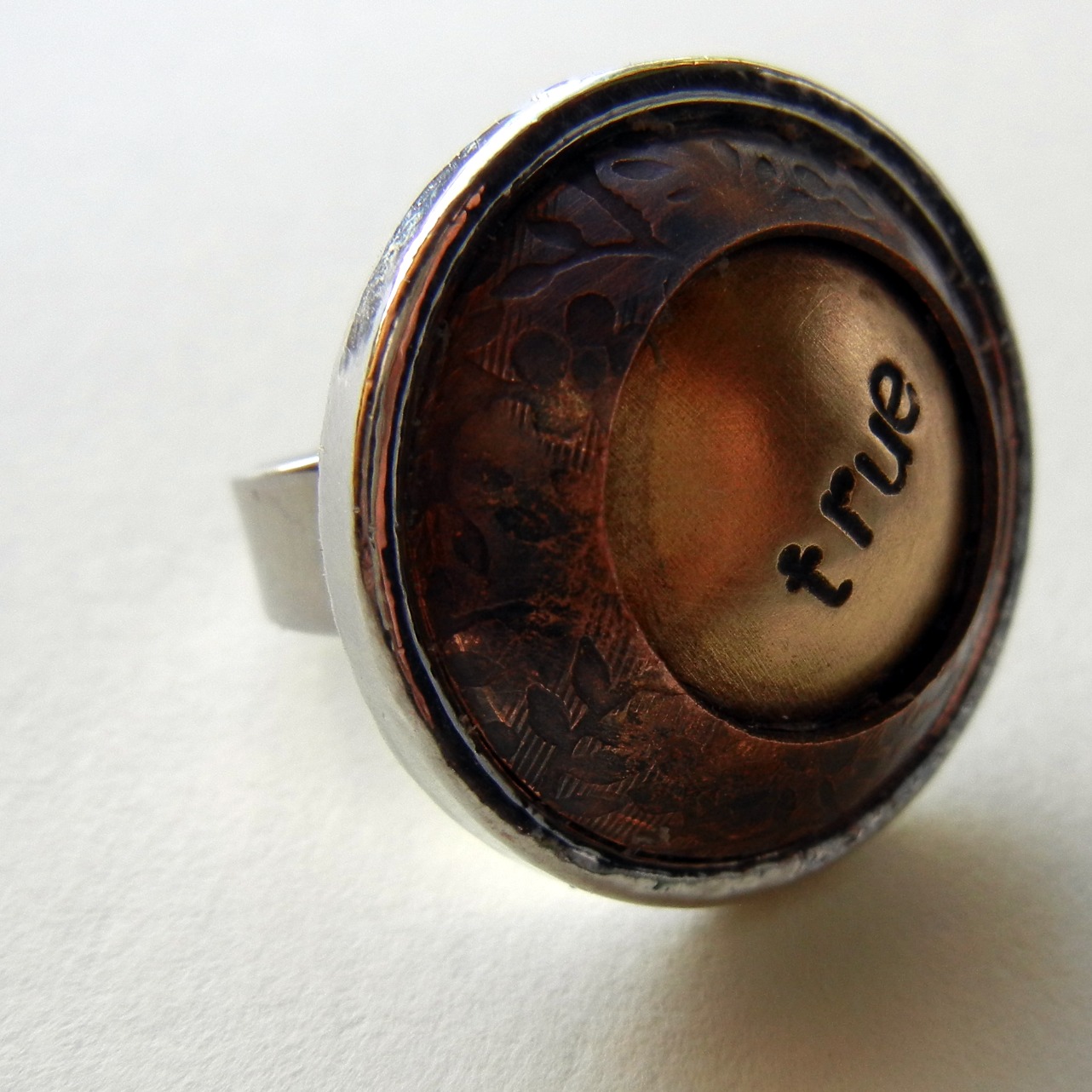
Dapped pieces can be layered too, like on my copper and brass ring.

One word of warning – you might need to upgrade your photography equipment to get good pictures of your dapped jewelry! I think the only way to get a clear picture of Mollie’s “God Save the Queen” necklace would be to use a professional light box. The domed Canadian penny is amazingly reflective. Since my photo-editing software lacks a “rhinestone-reflection remover tool,” this is as good of a shot as I could get. Believe me, the necklace is stunning in person!

A domed penny, brass filigree and snippet of rhinestone chain, all soldered onto a brass disk, forms the centerpiece.

I know you are quicker on the uptake than my computer: add dapping to your jewelry-making vocabulary today! ~ Cindy


PS: here are some handy links to some other how-to’s in the Rings & Things blog!

How to use heat to patina brass charms and filigrees

Thursday, March 31st, 2011
bee charms, raw and with heat patina

One before and two after applying heat patina. Check out the rainbows on the middle bee!

Ah, brass. Beautiful brass. I love everything about using brass in my handmade jewelry … except its raw brassiness.  Brass is affordable, easy to work with and available in all kinds of fun charms and filigrees. And while giving raw brass an antique patina with an oxidizing solution such as Win-Ox really is not difficult, my favorite method of coloring brass is the torch! It tones down that brash brassiness to a beautiful warm glow that is infinitely more appealing to my eye.

bee charm torch

Torching the bee charm only took a few seconds.

Applying heat to give metal a patina is so easy – and clean! No chemicals, no rinsing, no waiting! Sometimes you can even get shimmery rainbows to appear by holding the heat on a few extra seconds.

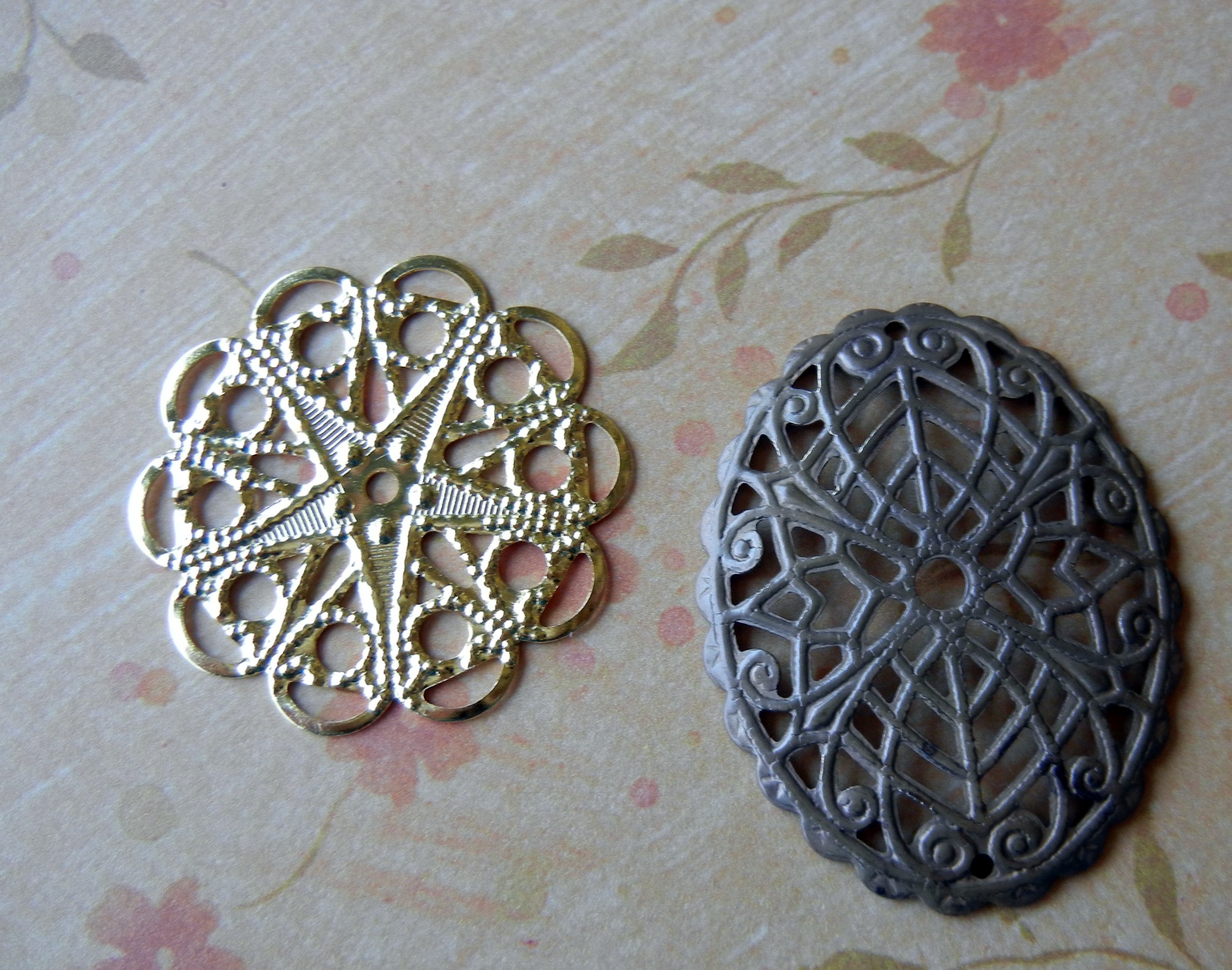
Heat patina raw brass filigree

Raw brass filigree, before and after meeting the torch flame.

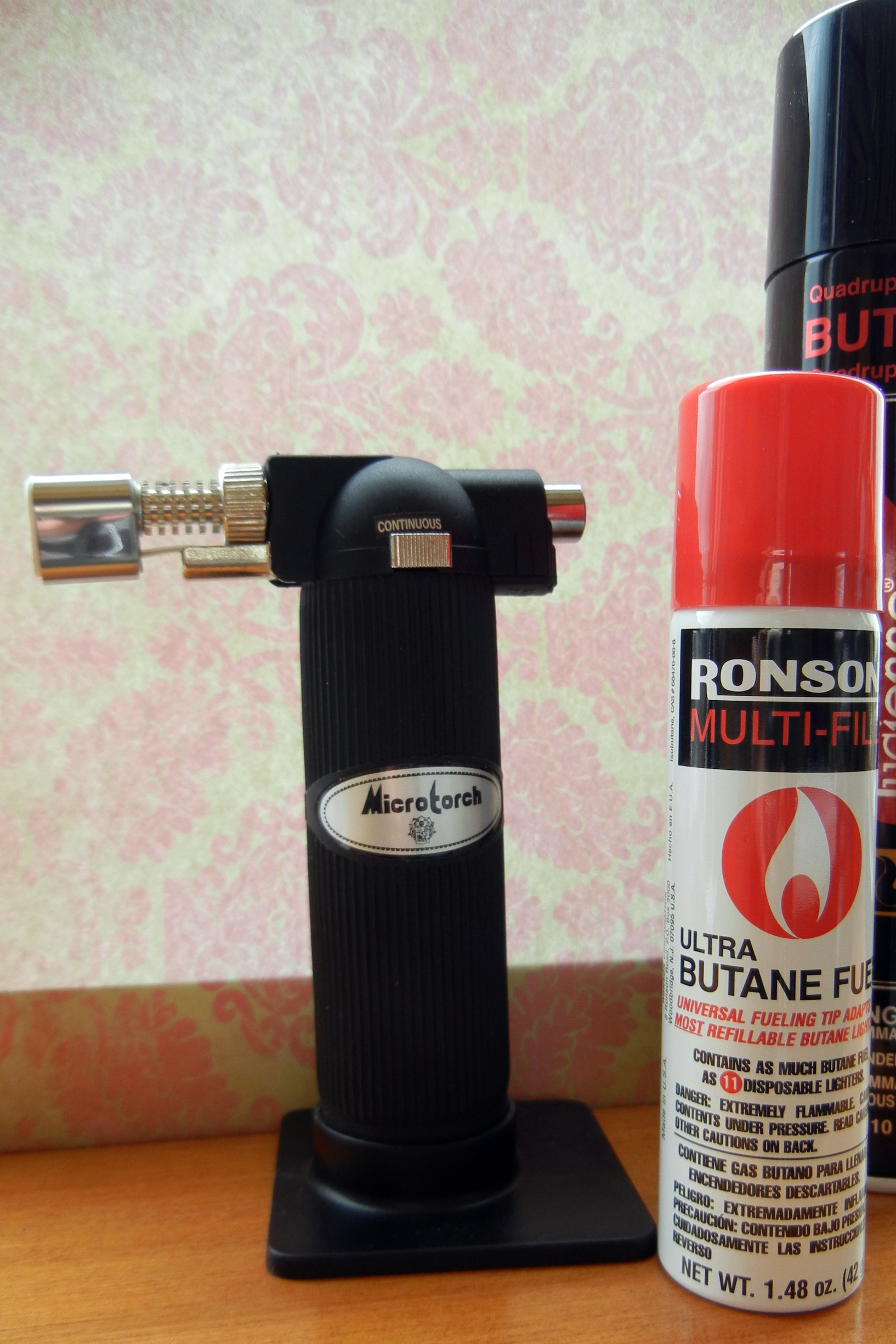
You all know to set up a heat proof work area before firing up your torch. This can be as simple as a cookie sheet. Tie back your hair, wear safety glasses and just plain BE SAFE. Do your homework before you start. A great book that explains all the necessities for working with a torch is Soldering Made Simple by Joe Silvera.

Butane is widely available at hardware stores.

Don’t feel fired up to experiment? You can buy Vintaj natural brass jewelry components, which have already undergone a chemical-free process to give them their rich color. Plated brass filigrees are also available. But I encourage you to try heat patina. It is the safest way to let your inner pyromaniac out to play!

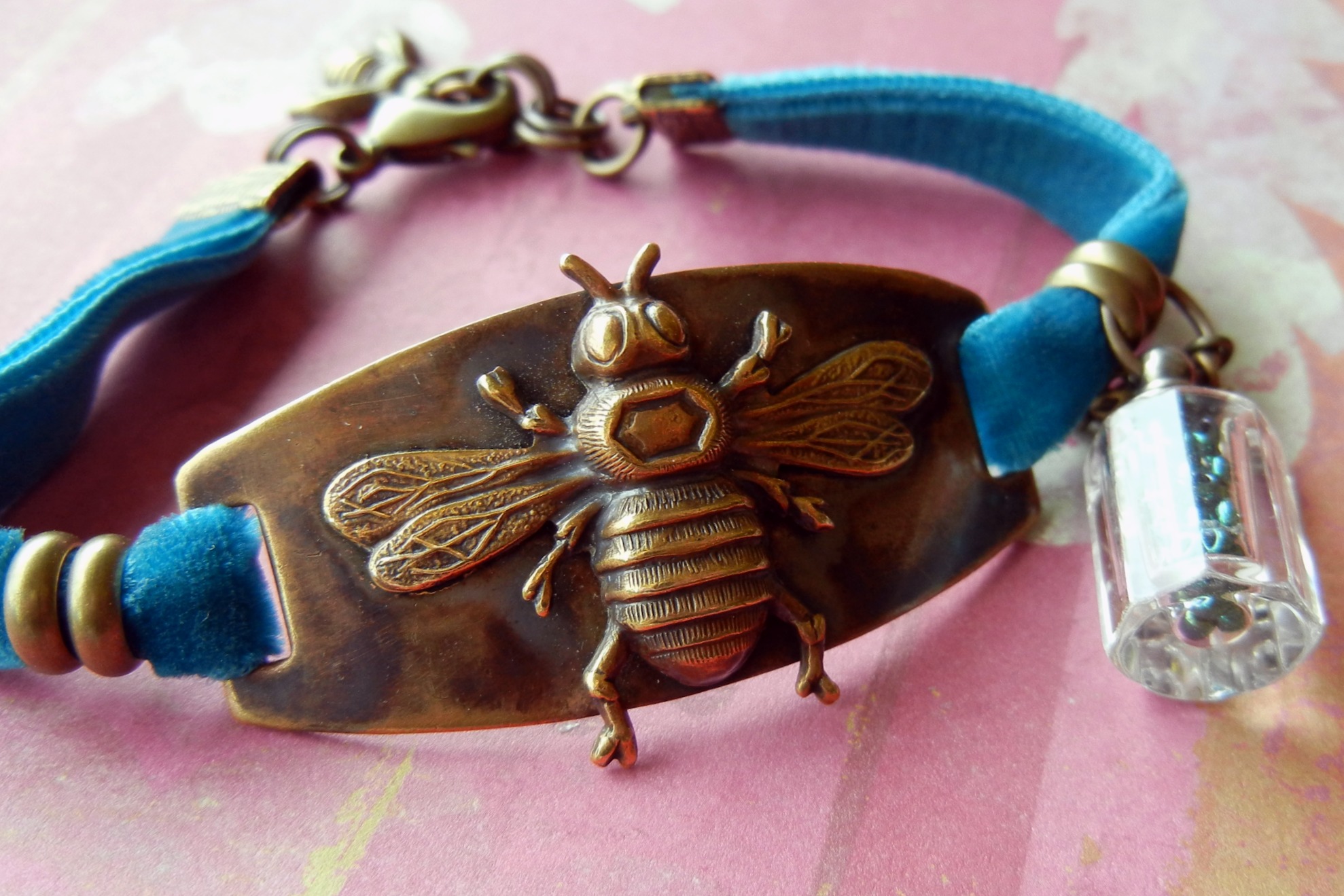
Velvet ribbon adds a luxurious feel to this brass bracelet.

Here is a gorgeous brass jewelry example by Mollie to inspire you! She soldered a raw brass bee to a Vintaj connector to make this bracelet, and used both heat and Win-Ox to patina the pieces. Full parts list and instructions for Blue Honey are available in our design gallery. ~ Cindy


PS: here are some handy links to some other how-to’s in the Rings & Things blog!

How to make interchangeable magnetic jewelry with 1″ buttons

Thursday, March 24th, 2011

bottle cap magnet button pendant

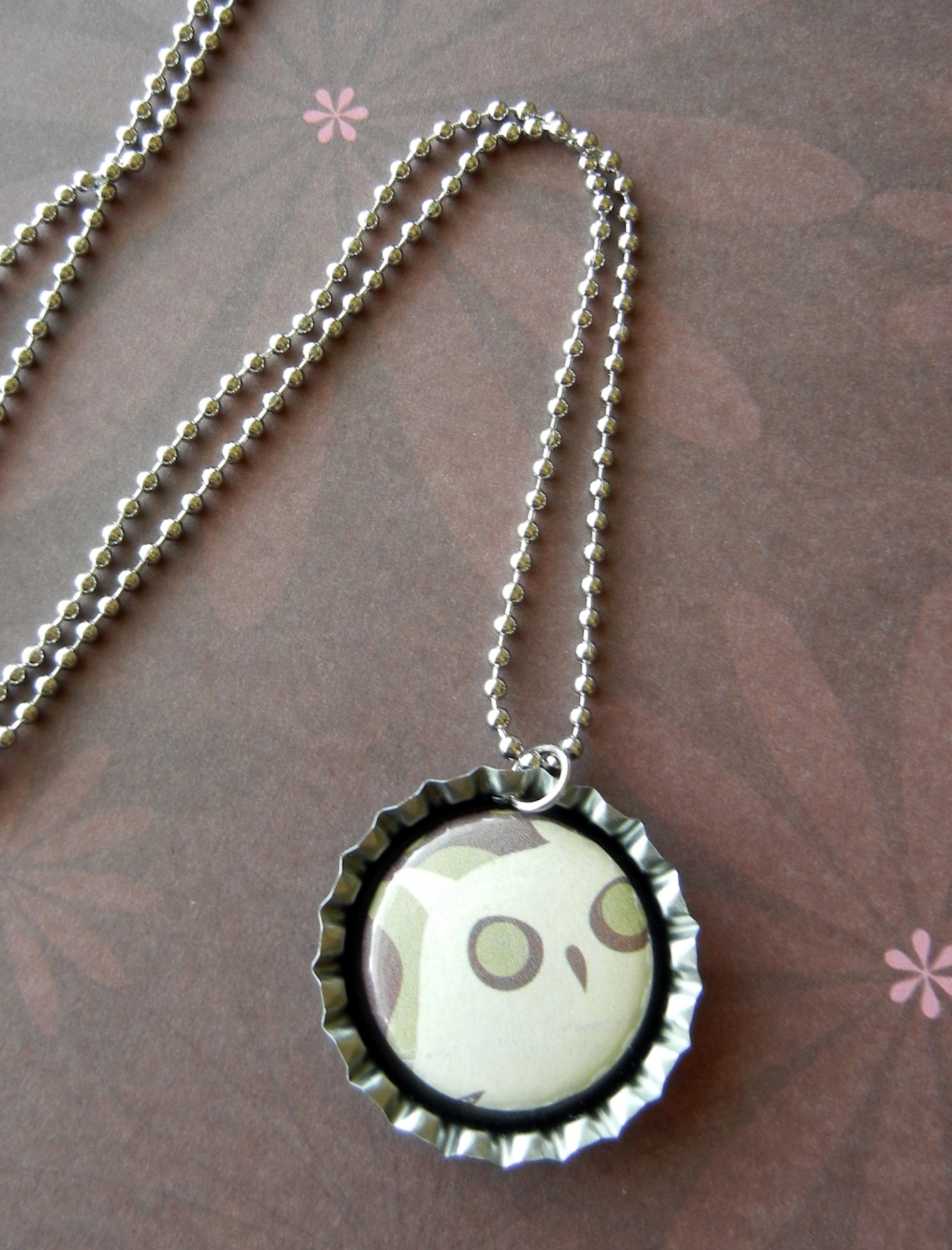
Handmade magnetic bottle cap necklace with assorted buttons
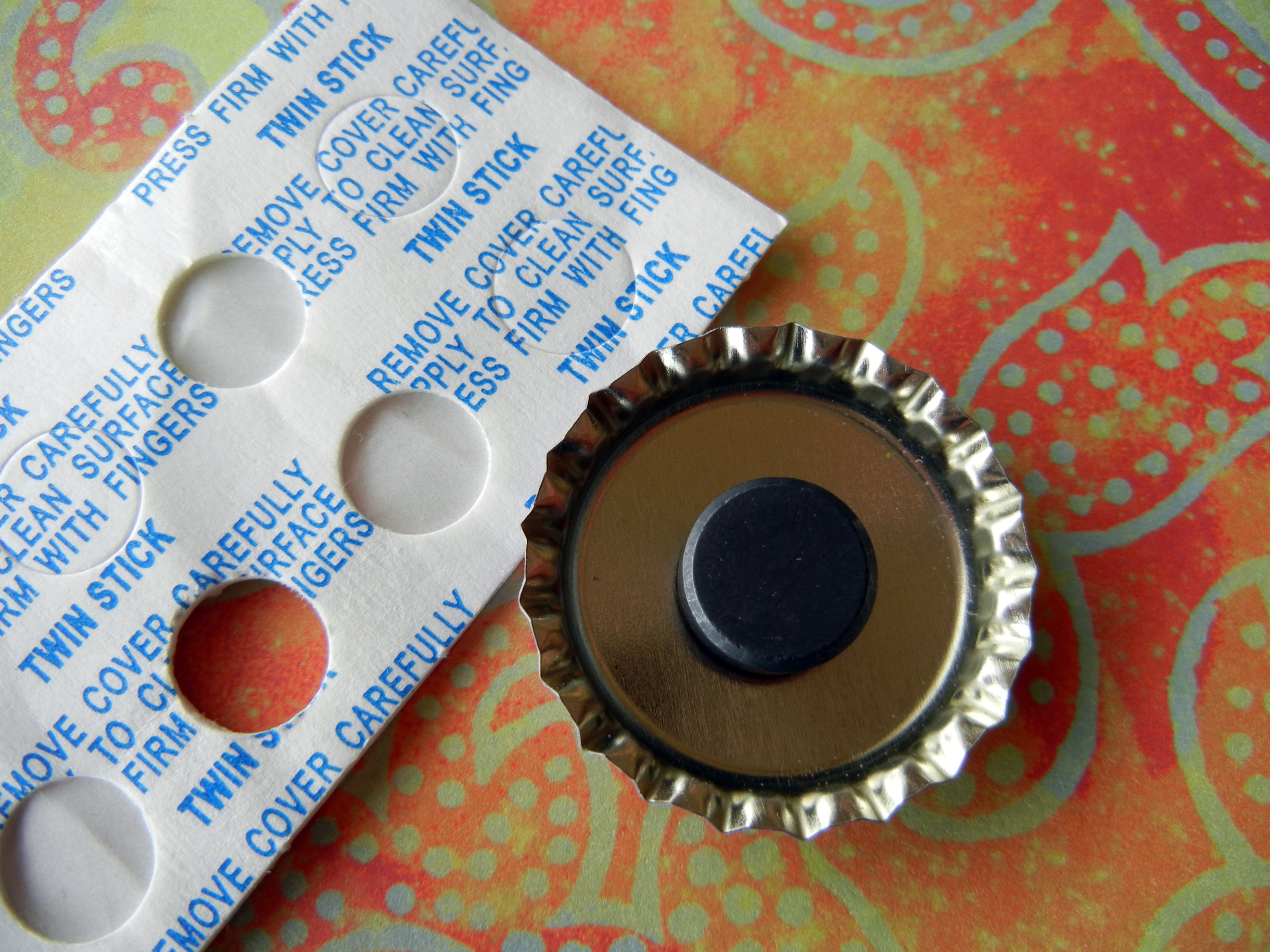
Mollie has been borderline obsessed with one particular item lately. It’s not a pretty gemstone bead or sparkly crystal pendant. It isn’t even new. No, Mollie is obsessed with plain old sticky dots. Almost daily, she’d ask me, “Oooh, have you tried the sticky dot?” and I’d just roll my eyes. But now I’m a convert too.

Sticky dots are just that – self-stick little glue pads. Easy to use, strong, zero mess, no fuss, no cure time, no smell. This is true instant gratification!

Round sticky dots fit perfectly under our magnets!

Two of Mollie’s recent designs use the sticky dot: the interchangeable magnet ring and the interchangeable magnet bottle cap pendant. Like many of you crafty people, Mollie has a button making machine. The little 1″ buttons are particularly adorable, and since they are made of steel, naturally they are magnetic. I don’t have a button machine myself, but I buy lots of buttons – and now I can wear them instead of leaving them on my bulletin board!


Here's the magnet

Here's the pendant - so cute!

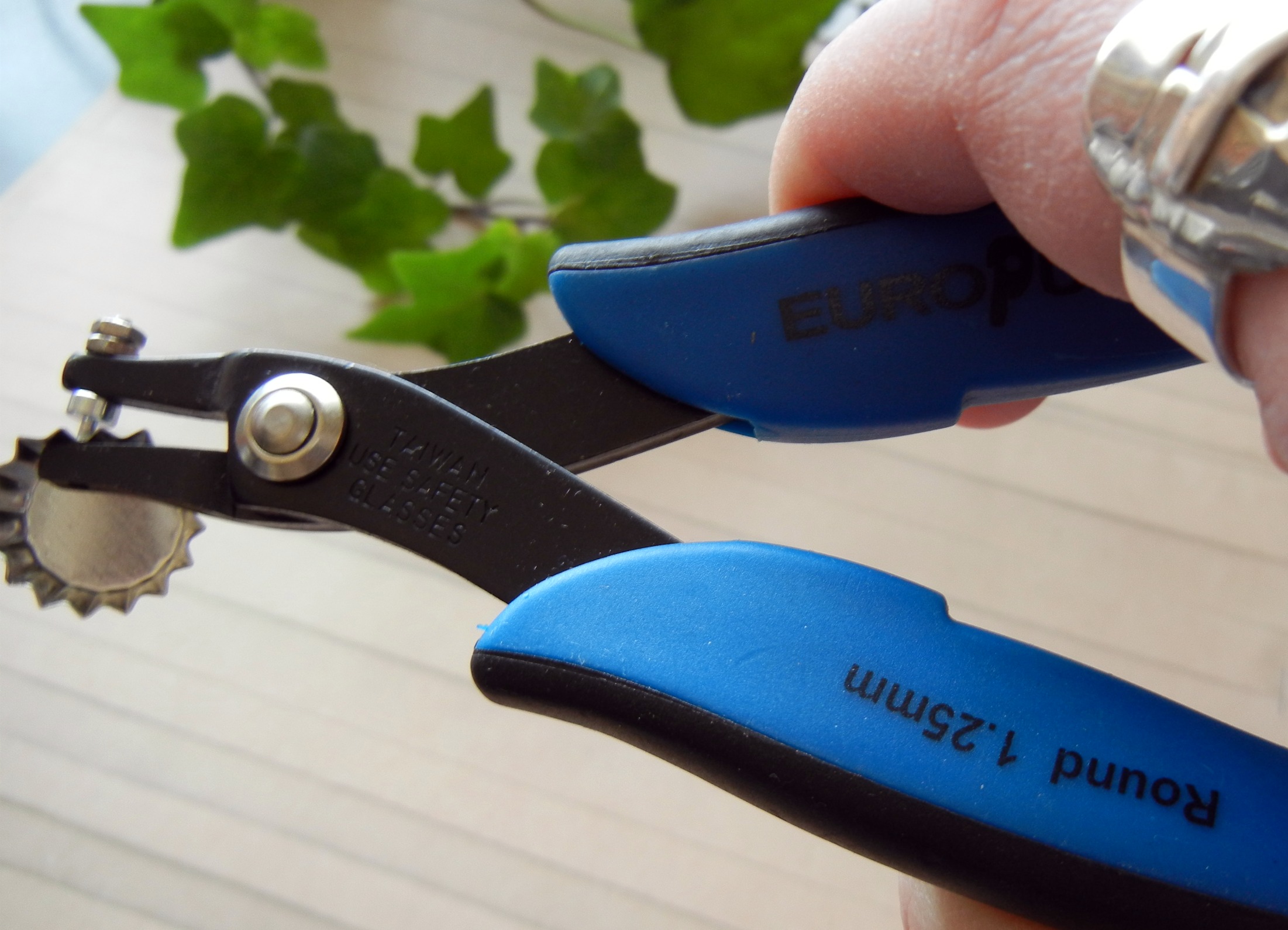
Rings & Things’ wholesale price breaks makes it really affordable to make a whole bunch of these necklaces. For about $50 (before shipping and tax, if applicable) you can get everything (except the buttons) to make 70 necklaces – with supplies leftover! If you don’t already have one, add a pair of EuroPunch pliers to make holes in the caps.

1 spool of ball chain (makes 70 17″ necklaces) $18-25 ~ 100 ball chain clasps $2  ~ 1 oz. jump rings $5-6  ~ 100 bottle caps $7-10  ~ 144 adhesive dots $6  ~ two packs of 35 magnets $12-14

The adhesive dot is completely hidden by the ring and magnet.

1" buttons make perfect rings!

The same value applies to the magnetic ring design – and absolutely no tools are required to make these!

72 adjustable flat-pad ring blanks $42-62, depending on color (we do sell a less expensive ring blank if you prefer, but the style and comfort of this style is worth the added cost)  ~  144 adhesive dots $6  ~ two packs of 35 magnets $12-14

At these quantities, the necklaces cost less than a dollar and the rings about $1.20 to 1.50 each to make. Buy more and the cost per is even lower. Ah, the genius of good design!  ~ Cindy

“Make everything as simple as possible, but not simpler.”
~ Albert Einstein


PS: here are some handy links to some other how-to’s in the Rings & Things blog!